
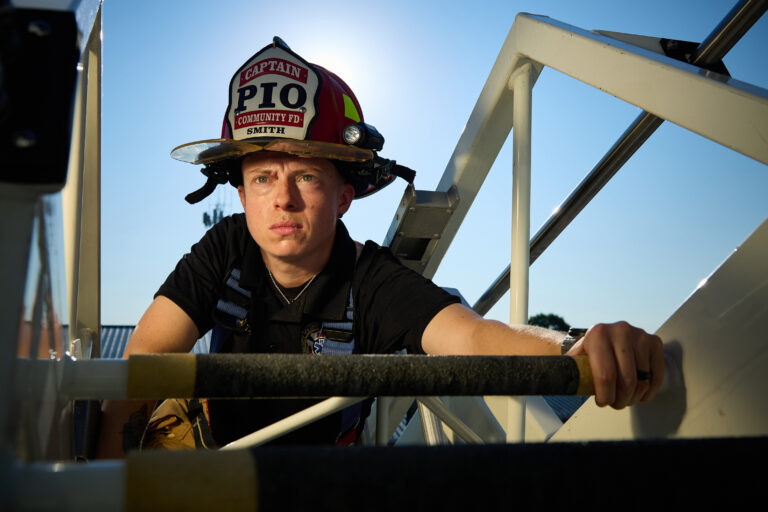
There are some ideas that just stick with you.
For me, The Call and the Quiet started with a podcast.
I was listening to Mike Rowe interview someone from a national volunteer firefighter organization. I don’t remember the exact organization anymore, but I remember the conversation. They started talking about just how much of the fire service across the United States is made up of volunteer firefighters.
That surprised me.
These aren’t people who occasionally show up and help out. They’re trained firefighters doing an incredibly difficult and potentially dangerous job. The difference is that many of them aren’t getting paid to do it. They’re giving up time with their families. They’re working training into already busy schedules. They’re leaving jobs, dinners and whatever else happens to be going on when the call comes in.
And they’re doing it because their community needs someone willing to answer that call.
That idea stayed with me.
Turning an Idea Into a Photography Project
Being based in Houston makes the story a little different.
Greater Houston has a large and well-established professional fire service. Around Harris County and the surrounding communities, you’ll find everything from large municipal departments to emergency services districts, combination departments and smaller volunteer departments.
So as I started developing the project, it became clear pretty quickly that this couldn’t only be about volunteer firefighters.
It needed to be about the larger first responder community and the people who choose this kind of service.
That’s where The Call and the Quiet began to take shape.
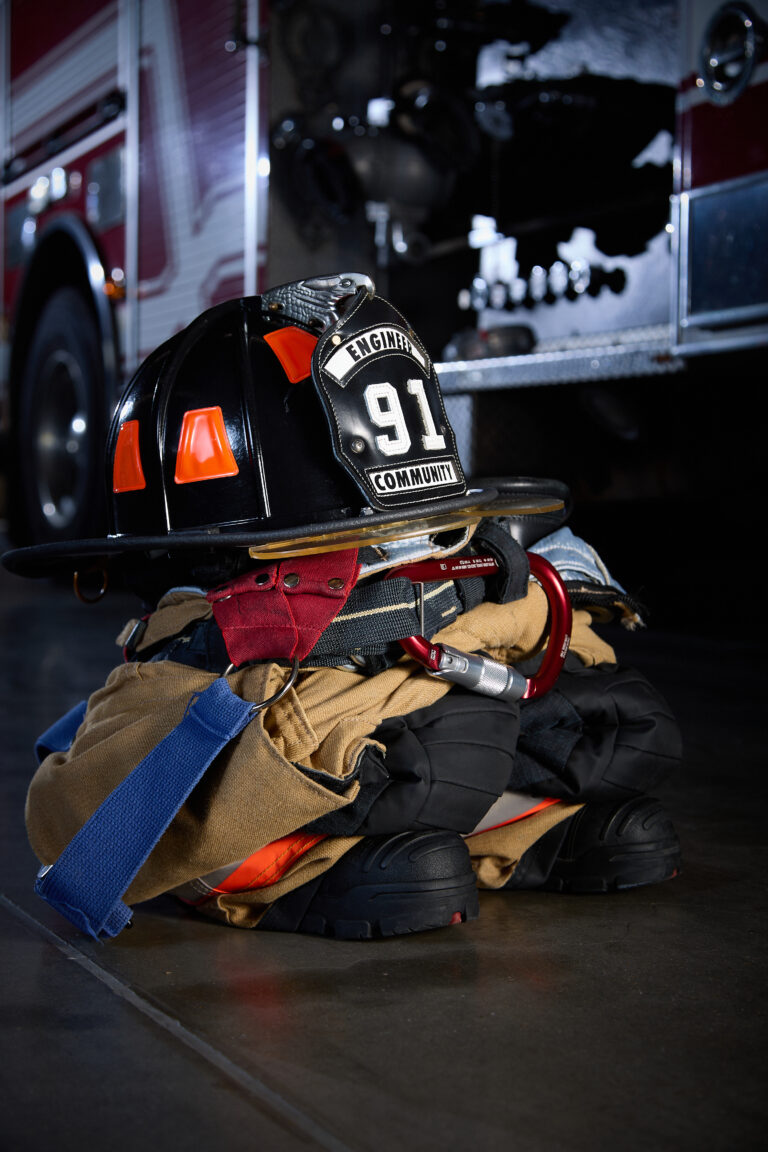
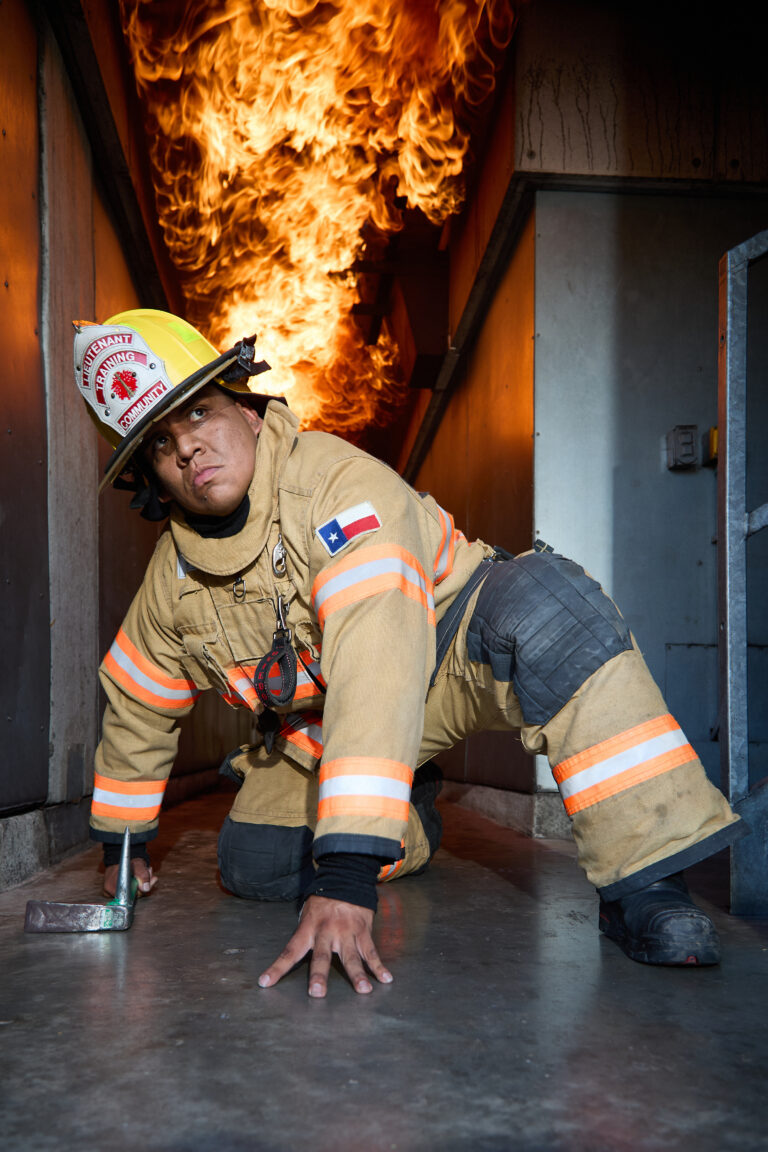
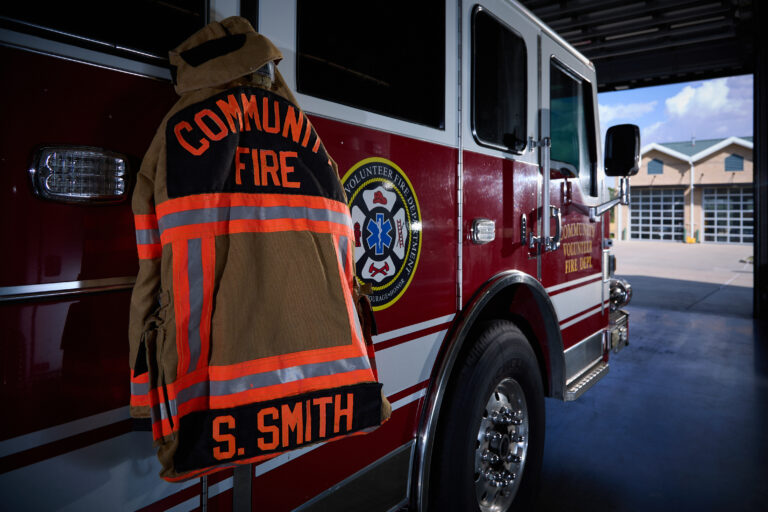
The project is still heavily centered on firefighters, because let’s face it, firefighting is incredibly visual. Fire trucks, turnout gear, tools, smoke, training structures and fire itself give you some pretty amazing things to work with as a photographer.
But that’s really the icing on the cake.
The people are what interest me.
I'm Not Trying to Photograph a Ride-Along
From the beginning, I knew what I didn‘t want this project to become.
I wasn’t interested in chasing calls or trying to be a photojournalist embedded with a department. There are photographers who do that extremely well. That’s simply not the work I’m trying to create.
I want to craft photographs.
When I work with a department, I’m approaching the shoot much more like I would approach a commercial photography assignment. We can slow down. We can think about the environment. We can choose the light, the location and the composition. We can move people. We can bring in lighting. We can look at what’s actually happening in front of the camera and decide how we want to tell that story.
The goal isn’t simply to capture something because it happened.
It’s to deliberately craft an image.
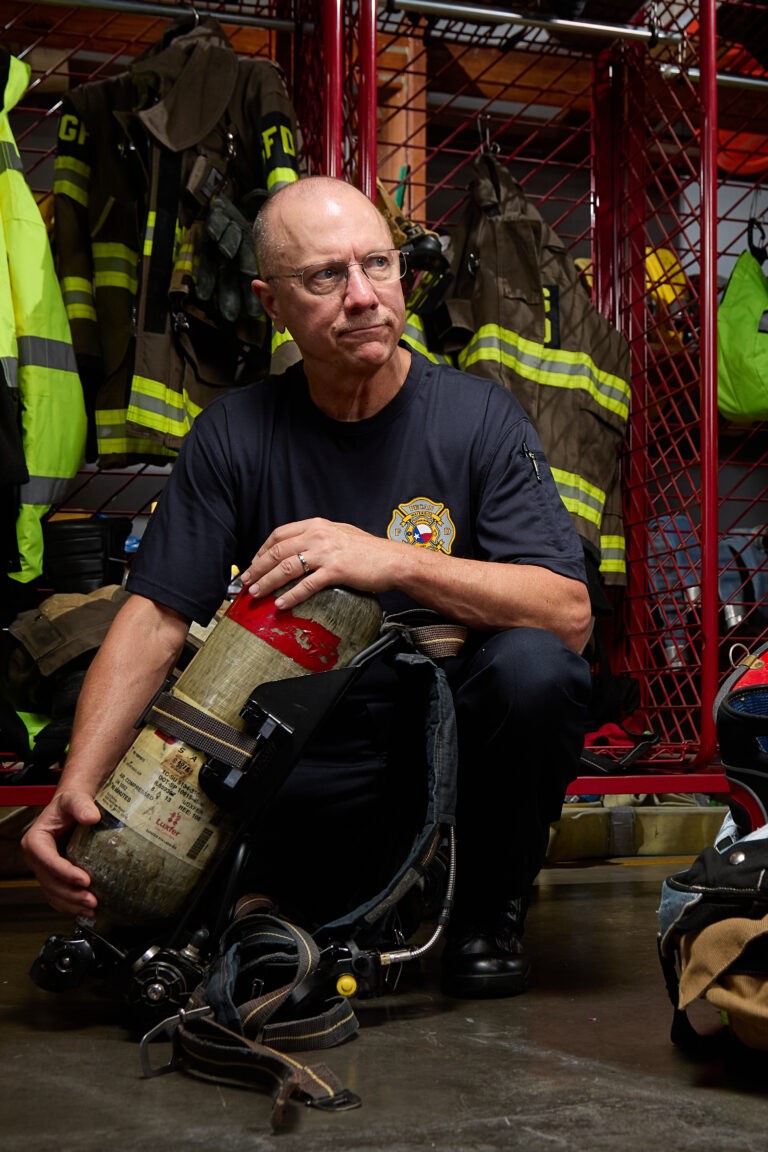
That philosophy is already part of the project. The current series includes carefully constructed portraits, environmental scenes and quieter moments around the firehouse rather than concentrating solely on emergency action.
And I’m trying to maintain that approach throughout the series so that, eventually, these photographs feel like one unified body of work rather than a collection of unrelated fire department photographs.
The Call Is Only Half the Story
Obviously, there’s the exciting side.
Put a firefighter in full turnout gear in front of a working fire and I’m going to have fun figuring out how to photograph it.
But The Call and the Quiet isn’t only about that.
I’m also interested in what happens when nothing is burning.
It’s the firefighter sitting beside his gear. The crew training together. The equipment waiting for the next call. The relationships inside the station. The jokes. The traditions. The experience of somebody who’s been doing this for decades working alongside somebody who’s still learning.
There’s a brotherhood and camaraderie within the fire service that’s difficult to understand from the outside.
There’s also a personal toll.
First responders see people on some of the worst days of their lives. They work in environments most of us would actively try to escape. They train continually because somebody else’s life may eventually depend on them knowing exactly what to do.
And then they go home.
That’s the quieter side of service that I’m interested in exploring.
Where The Call and the Quiet Is Going
Right now, this is a Houston photography project.
That’s partly practical. Travel costs money, logistics take time, and I’m building this project alongside running DNB Productions and working with my commercial photography clients.
But Houston also gives me an enormous amount to explore.
There are departments throughout the greater Houston area with different histories, different communities, different equipment and different ways of operating. And as I’ve started having conversations with people in the first responder community, the project has naturally begun expanding beyond firefighters.
Firefighters, paramedics, EMTs and emergency medical services work alongside each other every day. The more I learn about that world, the more possibilities I see for the project. One of those conversations has already opened the possibility of exploring the EMS side of first response more deeply.
I’m still very early in this.
And I’m okay with that.
I don’t have a predetermined number of photographs I’m trying to make. I don’t have a date when I’m declaring the project finished.
I’d actually like to see The Call and the Quiet continue for several years.
Maybe eventually it becomes a book. Maybe there’s an exhibition. Maybe it becomes something I haven’t thought of yet.
Right now, I’m more interested in making the next photograph.
Creating Something Departments Can Use
There’s another part of the project that’s important to me.
Participating departments receive professionally edited, high-resolution images they can use for things like recruiting, their website and community outreach. That’s been part of the structure of The Call and the Quiet from the beginning.
That matters because these photographs don’t have to exist solely as my personal work.
A strong environmental portrait can become a recruiting image. A photograph of a crew training can support community outreach. An image that shows the professionalism and personality of a department can help that department tell its own story.
That’s one of the things I enjoy about commercial photography in general.
A photograph can be visually interesting and still have a job to do.
What's Next
We’re currently in the dog days of a Houston summer, which is not necessarily the ideal time to ask somebody to put on full turnout gear so I can spend an hour experimenting with lighting.
So I’m working on the next round of shoots for the fall.
I want to work with more departments. I want to meet more of the people behind them. I want to explore more of the quieter side of the first responder community, while still taking advantage of the opportunity to create some really cool photographs when the trucks, gear, training and fire come out.
Most importantly, I want to keep building the work.
I don’t know exactly where The Call and the Quiet ends yet.
I think that’s probably a good thing.
Interested in Participating in The Call and the Quiet?
I’m currently talking with fire departments, emergency services districts and other first responder organizations throughout the greater Houston area about future sessions.
There is no photography fee for participating departments. In exchange for access and cooperation, departments receive a selection of professionally edited high-resolution photographs licensed for recruiting, websites and community outreach.